
From Global Standards to Local Terroir: The State of Food Sourcing in America — Part One

In our last post, a small glass pot of Irish butter — unbranded, humble, from a creamery near the Wild Atlantic Way — stopped us cold. It was better, and we knew it. The question that followed us home: why can’t we find that here? The answer, it turns out, is complicated. And very, very American.

Terroir Isn’t Just for Wine
Until recently, I’d never made the connection between the terroir of my food and the terroir of my wine. I know why I prefer a French Burgundy over a California Pinot — different soil, climate, and craftsmanship. I know to pair my cheese with something made in the same region: grows together, goes together, as we’re taught in wine. I even reach instinctively for Irish butter and San Marzano tomatoes, trusting that they carry the flavors of the land they come from.
But here’s the question that stopped me: do I really need to ship butter from Ireland or tomatoes from Italy to eat well? How do I find my local food champions? How do I find the farms and makers giving their corner of America its own terroir? And when I grab something off a grocery store shelf, how long has it been there? Where did it come from, and how far did it travel to reach me?
The United States is, in fact, one of the most geographically and culturally diverse food systems in the world. Its distinct food regions emerged from Indigenous foodways, colonial settlement patterns, immigration waves, agricultural specialization, and dramatically different climates!
From New England’s rocky coastline to California’s Mediterranean warmth to the arid Southwest. The result is a tapestry of cuisines more varied than almost any other nation. Lobster and cod thrive in cold New England waters. Citrus and avocados flourish in California. Wheat and corn dominate the Midwest. Chiles define the desert Southwest. Rice grows historically in the Carolina and Gulf marshlands.
That’s American terroir. It is real, it is remarkable...and it is far too often invisible in the mass-distributed supermarket aisle.
“We speak about the terroir of wine. It’s time we started speaking about the terroir of our food.”¹
Who’s Doing It Best & What We Can Learn
Across the globe, certain countries stand out for the sophistication and resilience of their food systems. Denmark has integrated agricultural policy, climate targets, and public procurement programs to encourage sustainable farming while giving consumers confidence in quality and safety.2,3 Their model emphasizes transparency, environmental stewardship, and a long-term policy approach that aligns incentives across the agricultural sector.
Singapore faces a different challenge: limited land and high dependence on imports. In response, the city-state has embraced controlled-environment agriculture — exemplified by Sky Greens, the world’s first low-carbon vertical farm.4,5,6 Singapore’s “30 by 30” initiative, aiming to produce 30% of its nutritional needs locally by 2030, demonstrates how strategic urban innovation can build resilience. (Stay tuned for my upcoming trip to Singapore and related Source & Standard blog post!)
France and Italy show the power of geographic certification systems — AOC, PDO, and DOP — to protect culinary heritage and local economies.7 Products certified under these systems are legally tied to specific regions, ensuring authenticity and maintaining both tradition and quality. In the Netherlands and New Zealand, high-tech efficiency and rigorous traceability allow for safe, export-ready products that maintain environmental and safety standards.
What can the U.S. learn? No single model is directly transferable, but these examples show that policy integration, urban innovation, geographic certification, and traceability are the critical levers for a resilient, transparent food system. The U.S. has the land, the talent, and the appetite. What it has often lacked is the policy will to connect them.
International Standards That Shape What Reaches Your Plate
International standards influence not only global trade but also domestic food safety and sourcing practices. The Codex Alimentarius, developed by the FAO and WHO, sets guidelines on food safety, labeling, and contaminants that are incorporated into national laws worldwide — including ours.8,9
Private standards play an equally significant role. The Global Food Safety Initiative (GFSI) benchmarks third-party certification programs, BRCGS, SQF, FSSC 22000, ensuring large retailers can source consistently and safely.10,11 GLOBALG.A.P. certification governs farm-level practices, covering food safety, worker welfare, and environmental stewardship.12,13,14 Technical frameworks like ISO 22000 and HACCP systems identify risks and manage hazards at each step in the supply chain.
Here’s the procurement attorney in me talking: these standards function as the baseline contract between producer and consumer. They define minimum expectations. But minimums aren’t the same as excellence. Codex tells us food is safe. It doesn’t tell us food is good. That distinction matters….and it’s exactly the gap that local sourcing, regional certification, and federal policy can help close.
The Farm Bill, Subsidies, and the Policy Roots of American Food
To understand why American food tastes the way it does, you have to understand who American agricultural policy was designed to serve... and who it wasn’t.
The Farm Bill is the sprawling, multi-year piece of federal legislation, renewed roughly every five years, that governs everything from commodity crop subsidies to SNAP benefits to conservation programs and rural development. The first version, the Agricultural Adjustment Act of 1933, was born of Depression-era crisis: collapsing crop prices, dust bowl conditions, and rural poverty. Its goal was to stabilize farm income by paying farmers to reduce supply. The logic made sense at the time.
What it evolved into is something more complicated. Decades of Farm Bill reauthorizations gradually concentrated subsidies toward large-scale commodity producers i.e. corn, soybeans, wheat, cotton, and rice, rather than the diversified, smaller operations that produce the fruits, vegetables, and proteins most associated with healthy, local eating. By the 2018 Farm Bill cycle, the Environmental Working Group estimated that the top 1% of farm subsidy recipients collected roughly 25% of all payments, while small and mid-sized farms and specialty crop growers received comparatively little.
The downstream effect? Subsidized commodity crops become the cheapest ingredients in the food supply. Corn becomes high-fructose corn syrup. Soybeans become livestock feed and processed food additives. The economics actively work against the kind of diversified, regionally specific, traceable food system that countries like Denmark or France have cultivated through different policy frameworks.
There are bright spots in recent Farm Bill iterations. The Local Agriculture Market Program (LAMP) which consolidated the Farmers Market Promotion Program and the Local Food Promotion Program , directs funds toward building local and regional food infrastructure. The Beginning Farmer and Rancher Development Program supports new entrants who are disproportionately likely to farm sustainably and sell locally. Conservation programs like EQIP (Environmental Quality Incentives Program) offer cost-share payments for practices like cover cropping, pollinator habitat, and reduced chemical use.
Tax policy adds another layer. Under Section 179 of the IRS code, farmers can deduct the full cost of qualifying equipment purchases in the year they’re made… a provision that historically benefits large capital-intensive operations over small diversified ones. However, some provisions do favor smaller-scale and local producers: the IRS allows farmers to use cash accounting methods that ease cash flow pressures, and certain conservation easements can generate significant tax benefits for landowners who voluntarily restrict development on agricultural land. Some states have gone further by offering sales tax exemptions on farm inputs, property tax relief for actively farmed land, and in a few cases, direct incentives for selling into local markets or donating surplus crops to food banks.
The 2023 Farm Bill reauthorization process surfaced a growing coalition of voices — from urban agriculture advocates to Indigenous food sovereignty groups to regional food hub operators — calling for a reorientation of subsidy structures toward the kinds of farms and food systems that serve both health and local economies. Whether that coalition gains sufficient policy traction remains an open and urgent question.
As a procurement attorney, I’ve spent my career thinking about how the structure of a contract shapes behavior. Farm Bills are, at their core, are long-term contracts between the federal government and American agriculture. They reward what they incentivize. Right now, the incentives are still largely misaligned with the food system most Americans say they want.
Changing that requires sustained attention to policy and not just consumer preference.
The Long Road From Farm to Fork
In the United States, the FDA and USDA frequently reference Codex guidelines for pesticide limits, HACCP programs, and labeling requirements.18,19,20 Private standards have transformed market access with many large retailers requiring GFSI-recognized or GLOBALG.A.P.-certified suppliers who are ensuring traceability but also creating real barriers for smaller, local producers who lack the resources to navigate certification bureaucracy.
The distances involved are staggering. On average, fruits and vegetables travel 1,500–2,500 miles before reaching our plates, while meat and dairy often traverse hundreds or thousands of miles from farm to processor to store.29 Only about 1.3% of Americans are actively farming today,33 compared to nearly 40% in the early 1900s.34 These long supply chains obscure origin, reduce freshness, and make it harder for local producers to compete …even as consumers say they want exactly that.
Sourcing matters because it shapes:
• Health: Shorter supply chains often mean fresher foods with greater nutrient density.35
• Economic resilience: Supporting regional food systems keeps money circulating locally.36
• Environmental impact: Transportation and storage are meaningful contributors to food system emissions.31
• Cultural identity: Food defines place & place defines belonging.
Global standards ensure safety. Local sourcing restores connection. And American terroir, the taste of a region in its produce and products, exists…. but is often invisible in mass-distributed supermarkets.
The Paradox of Abundance
There is a paradox in America. We produce more than enough food, yet many communities lack access to fresh, locally grown food. Obesity and food insecurity exist side by side.24,26 The same country that exports soybeans by the shipload has neighborhoods where a child’s only fresh vegetable is the garnish on a fast food tray.
Food insecurity intersects with mental health, stress, and the physical consequences of chronic nutrient deprivation.27,28 The policy failures explored above, namely a subsidy structure that favors commodity crops over fresh produce, a distribution system optimized for scale over proximity, certification requirements that favor big over small ….are not abstract. They show up in clinical waiting rooms.
One physician involved with Boston Medical Center’s Rooftop Farm program described the reality starkly:
“I was tired of patients bursting into tears because I told them they needed to feed their kids three meals a day.”³¹
Programs like BMC’s Rooftop Farm demonstrate that access to locally grown food matters for both physical and mental health — that the act of growing, choosing, and preparing real ingredients is itself therapeutic. BMC cardiologist Dr. Gary Balady put it plainly:
“Food is medicine.”³²
The most effective responses link food assistance with mental health support, empower local farmers through procurement and purchasing commitments, and build the kind of mindful consumer culture that makes better sourcing economically viable for everyone ….and not just those who can afford a farmers’ market premium.
Reclaiming American Terroir
On a recent trip to the Smithsonian National Museum of Natural History, I walked through exhibits tracing America’s agricultural evolution, from small farms to industrial production, from preservation jars to processed convenience foods.
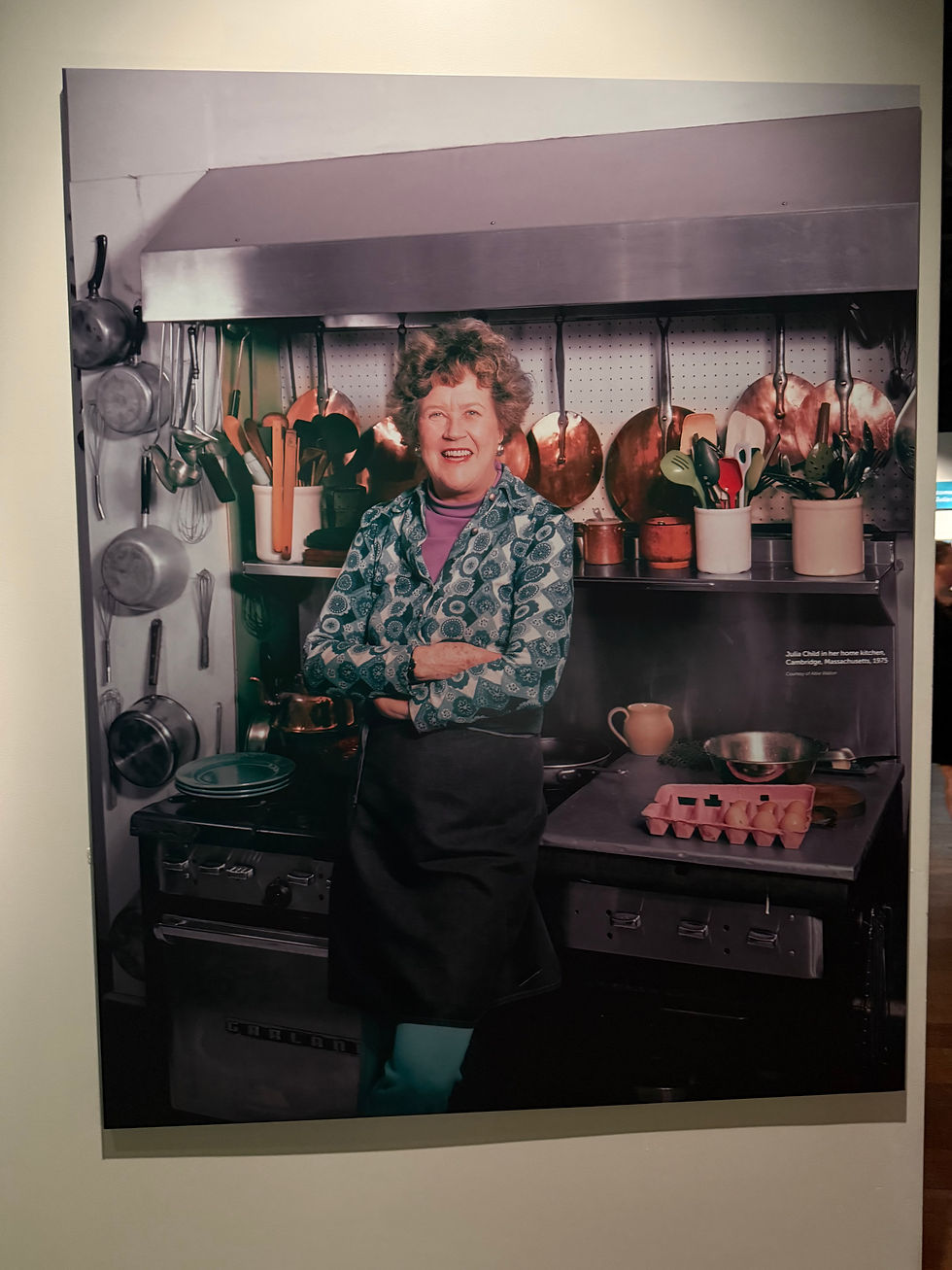
I thought about growing up the daughter of a student of Julia Child. In our kitchen, I watched America’s food transition in real time. From Campbell’s soup casseroles and boiled Irish dinners to Mastering the Art of French Cooking. Technique replaced shortcuts. Butter was real. Sauces were intentional. Ingredients mattered.
That was one transformation.
Today, we are in another. We are moving… fitfully, imperfectly, but genuinely from industrial anonymity toward conscious sourcing, from convenience toward curiosity, from “always available” toward seasonal appreciation.
The policy architecture hasn’t caught up yet. But the consumer appetite has.
American terroir is not Burgundy. It is not Parma. It is not Cork.
It is Vermont maple. California citrus. Gulf shrimp. Wisconsin dairy. Pacific Northwest salmon. Massachusetts cranberries. Urban rooftop farms. CSA programs. School gardens. Immigrant farmers growing culturally meaningful crops.
The U.S. is, in one sense, the most complex food nation on earth: a culinary mosaic shaped by Indigenous cultures that farmed corn, beans, squash, wild rice, salmon, and bison long before European contact; layered over by waves of Italian, Jewish, French, African, Spanish, German, Scandinavian, Mexican, and Asian immigration, each group adapting its traditions to what grew nearby. That complexity is our inheritance.
Knowing it, region by region, farm by farm, is the work ahead.
Understanding sourcing empowers us to make choices that support health, sustainability, and community. Learning from global leaders: Denmark’s policy integration, Singapore’s urban innovation, France and Italy’s geographic certification, Ireland’s ground-up integrity, gives us a map for what’s possible. Building the American version means engaging with Farm Bills, supporting local producers, demanding traceability, and voting with both our forks and our ballots.
You don’t need a passport to taste the difference. But sometimes, it helps remind you what’s possible.
Until next time, eat thoughtfully. Know your source.
Jennifer, Picky Eater Boston
Coming Up Source & Standard: U.S. Regional Series
Over a series of articles, Source & Standard will explore the country region by region — not just learning what people grow and eat, but why they do it. Each article will examine how local laws, regulations, cultural traditions, and historical practices shape food sourcing, influence culinary identity, and guide the future of what ends up on the plate. Some regions I know firsthand, enriched with my own photography and experiences. Others will require research, interviews, and creative storytelling to illuminate their food landscapes.(some regions may also be broken down further. Ex. Northern California and Southern California)
• New England — Cold water, rocky coastline, and a food system at the heart of the 50-by-60 movement. Lobster, cod, cranberries, and the fight to bring local food back to the region that invented it.
• Mid-Atlantic — Italian, Jewish, and Caribbean immigration layered over centuries of farming. The Hudson Valley, Philadelphia’s Italian Market, and what urban food equity looks like in practice.
• The South — African, French, and Spanish foodways woven into one of America’s most distinctive culinary regions — from Gulf shrimp and Louisiana rice marshlands to the slow reckoning with food access in rural communities.
• The Midwest — America’s breadbasket, shaped by German and Scandinavian settlers, and now ground zero for the Farm Bill’s consequences. Corn, soybeans, dairy, and the quiet return of heritage crops.
• Texas & the Southern Plains — Beef, chiles, and a food culture shaped equally by Mexican tradition and industrial ranching. Examining what “local” means at this scale.
• The Southwest & Mountain West — Indigenous food sovereignty, arid-climate agriculture, and the heritage of the Navajo, Pueblo, and Apache peoples who farmed tepary beans and sorghum long before anyone else.
• California — The world’s fifth-largest agricultural economy in its own right — and one facing existential pressure from drought, wildfire, and water rights. Citrus, avocados, almonds, and the immigrant farmworkers who make it all possible.
• The Pacific Northwest — Salmon, Dungeness crab, wild mushrooms, and a food system built on Indigenous stewardship and now leading the nation in regenerative agriculture and farm-to-table culture.
• Hawaii & the Pacific Islands — The most isolated food system in the U.S., importing over 85% of its food — and working urgently to reclaim the taro, breadfruit, and fishing traditions that fed the islands for centuries.
• Alaska — The final frontier of American food: wild salmon runs, subsistence hunting, Indigenous food sovereignty, and a state grappling with what food security means at the edge of the continent.
Whether walking a New England fish market, visiting a Southern farm, or speaking with someone who grew up in the Alaskan wilderness, each piece will combine observation, policy context, and history to explain how and why food is produced, distributed, and celebrated in each corner of the country.
Endnotes
1. Lyons, Jennifer. Source & Standard (2025).
2. “Sustainability in Denmark’s Food Sector.” Food Nation Denmark. https://foodnationdenmark.com
3. “Organic Farming Statistics – Denmark.” Eurostat. https://ec.europa.eu/eurostat
4. “Singapore’s Food Supply: Ensuring Resilience.” Singapore Food Agency. https://www.sfa.gov.sg
5. “Sky Greens: The World’s First Low-Carbon Vertical Farm.” https://www.skygreens.com
6. “Singapore’s 30 by 30 Vision.” Singapore Food Agency. https://www.sfa.gov.sg
7. “Appellations and Protected Designations of Origin.” European Commission. https://agriculture.ec.europa.eu
8. “About Codex Alimentarius.” FAO/WHO. https://www.fao.org/fao-who-codexalimentarius/en
9. “The Relationship between the WTO and Codex Alimentarius.” WTO. https://www.wto.org
10. “What Is GFSI Certification?” ASI Food Safety. https://www.asifood.com
11. “Comparing GFSI-Recognized Standards.” SGS. https://www.sgs.com
12. “GLOBALG.A.P. Certification Overview.” SCS Global Services. https://www.scsglobalservices.com
13. “GLOBALG.A.P. and GFSI Recognition.” MyGFSI. https://mygfsi.com
14. “Integrated Farm Assurance Version 6.0.” GLOBALG.A.P. https://documents.globalgap.org
15. “ISO 22000: Food Safety Management.” ISO. https://www.iso.org
16. “HACCP Principles and Application Guidelines.” FDA. https://www.fda.gov
17. “FSSC 22000 Overview.” FSSC Foundation. https://www.fssc.com
18. “Pesticide Residue Monitoring Program.” FDA. https://www.fda.gov
19. USDA. “Food Safety Standards and Guidelines.” https://www.fsis.usda.gov
20. Codex-aligned FDA/USDA guidelines. https://www.fda.gov
21. GFSI Requirements for Retailers. https://www.mygfsi.com
22. GLOBALG.A.P. Supplier Requirements. https://www.globalgap.org
23. Local Food Hubs and CSA Programs. USDA. https://www.ams.usda.gov
24. Farmers’ Market Census Data. USDA. https://www.ams.usda.gov
25. Urban Agriculture Programs. National Sustainable Agriculture Coalition. https://sustainableagriculture.net
26. Feeding America, “Food Insecurity in the U.S.” https://www.feedingamerica.org
27. Gundersen, C., & Ziliak, J. “Food Insecurity and Health Outcomes.” Health Affairs, 2015.
28. Seligman, H., & Schillinger, D. “Hunger and Socioeconomic Disparities.” NEJM, 2010.
29. Pirog, R., & Benjamin, A. “Checking the Food Odometer.” Leopold Center for Sustainable Agriculture, Iowa State University.
30. Davis, D. et al. “Changes in USDA Food Composition Data for 43 Garden Crops.” Journal of the American College of Nutrition.
31. EPA. “Greenhouse Gas Emissions from Transportation.” https://www.epa.gov
32. National Academies of Sciences. “Resilient Food Systems.” https://www.nationalacademies.org
33. USDA Economic Research Service. “Ag and Food Statistics: Charting the Essentials.”
34. USDA Census of Agriculture.
35. Harvard T.H. Chan School of Public Health. “Fresh vs. Processed Foods and Nutritional Quality.”
36. USDA. “Local Food Systems: Concepts, Impacts, and Issues.”


Comments