
Can New England Feed Itself?


Source & Standard — U.S. Regional Series, Part Two
Climate, Culture, and the Geography of Flavor
From cranberry bogs to lobster traps, New England’s food culture is deeply local — even if most of its food isn’t.
Friday Night Beans
Every Friday night at my grandmother’s house meant the same dinner: hot dogs (franks) and baked beans. The beans came from a Currier family recipe handed down through multiple generations! I still make them today. Slow-baked with molasses and salt pork until the sauce thickened into something sweet, smoky, and unmistakably New England.
Nobody called it local food. It just was.
That’s the thing about New England’s food identity: it arrived before the vocabulary did. Long before farm-to-table became a marketing category, this region had a cuisine built around what the land and water produced. Beans and root vegetables that stored through brutal winters, dairy from rocky-pasture farms, and seafood pulled from some of the most productive cold water on earth.
Take the lobster. Honestly it cracks me up that today, tourists queue at seaside shacks for lobster rolls built around the American lobster as if it were Always a luxury item.... It wasn’t. Well into the nineteenth century, lobster was so abundant it was considered working-class food. Lobster was fed to servants, prisoners, and apprentices who reportedly negotiated contracts specifying they wouldn’t be served it more than three times a week.1 (this pickyeater would have tried to negotiate never!) but The lobster didn’t change.
The supply chain, the marketing, and the perception of scarcity did.
That gap, between what New England’s food culture says it is and what its food system actually delivers, is the subject of this article.
Growing Up in the Cranberry Belt

I grew up on the South Shore of Massachusetts, where food and landscape were impossible to separate. Cranberry bogs were everywhere! I even did my sixth-grade History Day project on them. In fall, the harvest flooding turned the bogs into deep red mirrors. In winter, the shallow water froze into natural skating rinks where we (I use "we" loosely, as I was usually good for showing up to slide along in sneakers and cheer my friends on!) played hockey until our mothers called us in.
The same bogs that gave us ice in December gave us cranberry juice by summer. I didn’t think of this as a supply chain. I thought of it as home.
Growing up here also meant growing up with certain recipes as fixed points. My mother studied at Boston University and came home with a well-worn copy of the Fannie Farmer Cookbook, Marion Cunningham’s classic!

from which she made blueberry pancakes and scones that looked deceptively simple but were, as anyone who’s tried to make them knows, remarkably finicky to get right. I’ve been making those blueberry pancakes for my niece since she was old enough to eat real food.
She now claims she’s always preferred chocolate chip. The photos disagree.

These are small stories. But they’re the kind of small stories that explain why people in this region feel a visceral connection to local food...and why the gap between that feeling and the reality of where our food actually comes from matters so much.
Why New England Food Tastes the Way It Does
Across Maine, Vermont, New Hampshire, Massachusetts, Connecticut, and Rhode Island, the climate is broadly similar: cold winters, short growing seasons, and rocky glacial soils left behind by the last ice age. These conditions are not ideal for high-volume commodity agriculture. They are, however, exceptionally well-suited to foods that store well, that develop flavor slowly, and that reflect the particular character of a specific place.
Beans and root vegetables, turnips, parsnips, potatoes, carrots, thrive in cool soil and keep through winter. Apples flourish in the region’s glacially-drained hillsides; New England was once the apple capital of the continent, with hundreds of heritage varieties bred specifically for this climate.2 Dairy cows graze the region’s rocky pastures with a persistence that flatland breeds don’t require, producing milk that historically made Vermont cheddar and New England butter distinct products.
The Atlantic coast added the other half of the larder. The cold, nutrient-rich waters of the Gulf of Maine produce some of the world’s finest shellfish (I honestly do wish I liked shellfish!): oysters that carry the mineral character of their specific estuaries, sea scallops from the Georges Bank, clams that gave the region its most iconic dish, clam chowder! Cod was once so abundant that early colonial accounts describe catching it by lowering buckets off the side of a boat! Cod helped build the regional economy and the regional diet simultaneously.3
Boston baked beans, the dish that gave the city its most enduring nickname, Beantown, are themselves a product of intersecting supply chains: navy beans suited to New England soil, molasses that arrived as part of the colonial Triangle Trade through Boston’s harbor, salt pork from local farms. The recipe encoded geography.
Six States, One Foodshed: The Cultural Layers

Before the colonists arrived with their bean pots and molasses, the Indigenous peoples of this region had already built a sophisticated food culture. The Wampanoag Confederacy and the Wabanaki peoples, whose territories covered much of what is now Massachusetts, Rhode Island, Maine, and New Hampshire, farmed the "Three Sisters" (corn, beans, and squash) in complementary polycultures, harvested wild blueberries, cranberries, and chestnuts, fished the rivers and coast seasonally, and preserved food through techniques including smoking, drying, and cold storage in earthen pits.4 The agricultural landscape the colonists encountered was not wilderness; it was a managed food system.
The European settlers who followed brought their own traditions and adapted them to what grew here. English baking culture and dairy practices shaped the region’s table fundamentally. Later waves of Irish, Italian, Portuguese, Franco-Canadian, and Eastern European Jewish immigrants each layered their own food traditions onto the New England base; the Portuguese fishing communities of New Bedford and Gloucester, the Italian neighborhoods of Boston’s North End, the Franco-Canadian families whose pork pie traditions became a Quebec-border staple.5
My own background reflects those early waves. Part Irish, Swedish, English, and Scottish ancestry, with family lore of more distant Native American roots..... We can trace our family back to the American Revolution, though as my aunt once noted dryly, we probably shouldn’t bother applying to the DAR aka Daughters of the American Revolution: our ancestors were Loyalists. Ugh.
_______________________________________________________________________________________
“The agricultural landscape the colonists encountered was not wilderness.
It was a managed food system.”
________________________________________________________________________________________
The Big Paradox: New England Only Feeds Itself 10%
Here is the central tension of New England’s food story: despite its strong food identity, its iconic ingredients, its centuries of agricultural and fishing tradition, and its current wealth of farmers’ markets, CSA programs, and farm-to-table restaurants, New England produces only about ten percent of the food its population consumes.6
Ten percent. The rest, the vast majority of what six states and nearly fifteen million people eat every day, travels in from elsewhere. Vegetables from California and Florida. Meat from the industrial Midwest. Dairy increasingly from large consolidated operations outside the region. Fish, in many cases, imported from overseas even as New England’s own fishing industry struggles.
Food Solutions New England, a network of food system leaders across the six states, has set an ambitious target: increase regional food self-reliance to fifty percent by 2060.7 Known as the 50-by-60 vision, the goal is not self-sufficiency in the abstract but a deliberate reorientation of the regional food economy: more small farms, stronger local meat and dairy infrastructure, year-round access to regionally sourced vegetables, and investment in the food businesses that make local sourcing economically viable.
The distance between ten percent and fifty percent is not primarily a farming problem. New England has the land, the farmers, the climate knowledge, and the consumer appetite. The distance is a policy problem, an infrastructure problem, and an incentive problem ... and all three require deliberate intervention to close.
The Policy Layer: What the Law Actually Says
Public institutions such as schools, universities, hospitals, and state agencies purchase enormous quantities of food. In New England, those procurement decisions represent one of the most powerful and underutilized levers for redirecting food dollars toward local farms. Whether those dollars flow to a farm in Deerfield, MA or a distributor in New Jersey depends, in large part, on what the law requires... and whether the institutions charged with following it actually do.
The six New England states have taken meaningfully different approaches to this question, ranging from detailed statutory mandates to informal administrative programs. Here is where each state stands:
Massachusetts — The Architecture and the Gap
M.G.L. Chapter 7, §23B requires state agencies to give preference to Massachusetts-grown agricultural products and seafood when available and priced within ten percent of out-of-state alternatives. A meaningful statutory floor, but only a floor.
The more active engine of local purchasing in Massachusetts schools is the FRESH Grant Program (Farming Reinforces Education and Student Health), administered by DESE and supported on the ground by Massachusetts Farm to School, a statewide organization that has been connecting schools with farmers since 2004, now active in more than 160 public school districts and at least 40 colleges and private schools. In early 2025, DESE awarded over $500,000 in FRESH grants to 25 districts and childcare centers, alongside $350,000 in FRESH CORP capacity-building grants such as funding kitchen equipment, staff training, school gardens, and procurement infrastructure.
A 2024 round attracted over $2.5 million in requests from nearly 80 applicants against a $400,000 pool: a six-to-one demand gap that tells you exactly where the bottleneck is. The structure here is worth naming explicitly, because it illustrates how state law creates the architecture that enables local municipalities to actually buy local.
The §23B preference gives procurement officers legal cover to pay a premium for local food without triggering an audit finding. The FRESH grant gives food service directors the budget to absorb start-up costs. And the Massachusetts Farm to School network provides the relationship infrastructure, the farmer contacts, the compliant procurement templates, the staff training, that makes execution possible at the local level. Remove any one of those three layers and the system stalls. A pending bill, S.311, would strengthen the structure further by codifying FRESH in statute and adding a matching-funds incentive: one state dollar for every two dollars a school spends on Massachusetts-grown products.
That tiered local preference mirrors the same logic Ireland built into Origin Green — making the right sourcing choice the rewarded one, not just the permitted one.
Vermont — What It Looks Like When It Works
Vermont has enacted two complementary Farm-to-School statutes, 16 V.S.A. §1264a directing the Agency of Education to promote local food purchasing and provide technical assistance, and 6 V.S.A. §4719 establishing grant programs for schools to buy from Vermont farms... but the statutes are only the beginning of the story.
What Vermont has built on top of that legal foundation is the most mature farm-to-school ecosystem in New England, and arguably in the country, and the numbers are worth sitting with. Over 89% of Vermont schools purchase some local food. More than 100 Vermont farms sell directly to Vermont schools or early childhood programs. And 56% of early childhood providers serve local food at least once a week. Vermont schools spend over $20.2 million on food annually, and an increasing share of that is flowing to local producers. The Local Foods Incentive Grant (LFI), launched in 2021 under the Agency of Education, rewards districts directly for hitting local purchasing thresholds: schools that reach 15% local purchasing receive an additional $0.15 per meal served; at 20%, $0.20; at 25%, $0.25. Those grants typically translate to $20,000–$40,000 per district which is real money for a small rural school food budget. In 2021, five of Vermont’s 69 School Food Authorities (SFAs) hit the 15% threshold. By 2023–2024, thanks in part to aligned federal Local Food for Schools funding, twelve SFAs reached it, collectively spending $1.2 million on local food that year alone. The program also works through food hubs: Vermont routed federal LFS dollars through regional food aggregators, so that all 69 SFAs received locally sourced food, with awards scaled by enrollment. 98% of food service directors reported a positive experience. A 2016 University of Vermont study found that every dollar spent on local food in Vermont generates $1.60 back into the state economy.
The system works because it is a system: statutory mandate, performance-based financial incentives, food hub infrastructure, technical assistance from Vermont Farm to School and Farm to Early Childhood networks, and the Harvest of the Month program providing ready-made curriculum materials so that local food in the cafeteria also shows up in the classroom.
It is, in procurement terms, a well-designed contract: clear performance standards, meaningful rewards, and the support infrastructure to make compliance achievable.
And it is currently under pressure. When the USDA terminated the Local Food for Schools and Child Care program in early 2025, Vermont lost $1.2 million in federal funding that had been flowing directly to local farms through school purchases, a reminder that even the most robust state-level systems remain exposed to federal policy reversals. Vermont responded by appropriating $500,000 in one-time state funds to partially backfill the gap. The willingness to do so reflects how deeply this infrastructure is now embedded in Vermont’s agricultural and educational identity.9 See endnotes 9 and 10 for statutory citations.
Maine — Maine operates a Farm and Sea to School program administered through the Department of Agriculture, Conservation and Forestry and the Department of Education, which connects schools and other public institutions with local farms and fishing operations.11 Maine’s program is administratively driven rather than anchored in a single statutory mandate, which gives it operational flexibility but also means its continuity depends more heavily on agency commitment and budget cycles than statutory obligation.
Rhode Island — Rhode Island’s procurement framework includes two notable provisions. Under R.I. Gen. Laws §37-2-8, state agencies may give preference to locally grown agricultural products in their purchasing decisions.12 A separate provision at §21-4.1-8 goes further, establishing a specific preference for in-state dairy products in state institutional purchasing.13 The dairy-specific provision reflects Rhode Island’s recognition that its small dairy sector is particularly vulnerable to price competition from out-of-state industrial producers.
Connecticut — Under Conn. Gen. Stat. §10-215d, Connecticut school districts are encouraged to purchase food from Connecticut farms and to incorporate farm-to-school programming into their nutrition programs.14 The statute establishes a Farm-to-School Advisory Council charged with identifying barriers to local purchasing and recommending policy improvements. This acts as a structural acknowledgment that institutional procurement reform requires ongoing attention, not a one-time mandate.
New Hampshire — New Hampshire relies primarily on administrative farm-to-school programs rather than statutory purchasing preferences, making it the least legislatively anchored of the six states on this issue.15 The state’s Department of Education supports local food purchasing through grant programs and technical assistance, but without a statutory preference provision, local sourcing remains more dependent on individual district initiative than regional or state-level policy.
Taken together, these six frameworks reveal both a regional patchwork and a policy design lesson.
Vermont shows what is achievable when statutory mandate, performance-based financial incentives, food hub infrastructure, and technical assistance operate as a coherent system. Massachusetts shows what happens when the architecture is half-built: a strong preference statute, a growing grant program, and a dedicated Farm to School network...but not yet a permanent statutory incentive to drive purchasing at scale. Maine, Rhode Island, Connecticut, and New Hampshire occupy different points on that spectrum, each with programs that work within their constraints but none yet with Vermont’s depth or measurable results.
The deeper lesson, and the one that matters most for the 50-by-60 goal, is about what state law actually does and doesn’t do on its own.
A preference statute like M.G.L. §23B or Rhode Island’s §37-2-8 does something important: it removes the legal risk for a procurement officer who wants to pay more for a local product. Without that statutory cover, a school business administrator who chooses a Massachusetts apple over a cheaper one from out of state is potentially exposed; open to a bid protest, an audit finding, or simply the accusation of not acting in the public’s financial interest. The statute changes that calculus. It says: this preference is the policy of the Commonwealth. You are authorized to act on it. That authorization matters. But authorization alone does not move food from a farm in Deerfield to a cafeteria in Worcester. What does that is the combination of legal authority plus financial incentive plus procurement infrastructure plus relationships..... and Vermont has spent fifteen years building all four layers simultaneously. The result is 89% of schools purchasing local food. Massachusetts, with comparable farmland, comparable consumer values, and a comparable preference statute, is still building its grant and infrastructure layers. The gap between the two states is not farmland or farmer enthusiasm. It is policy design. And policy design is fixable.
What Technology Can and Can’t Fix
The infrastructure gap is real, and technology is part of the answer. Vertical farms, stacked growing systems that use LED lighting, hydroponic nutrients, and controlled environments to produce leafy greens year-round — are already operating in New England cities and represent a genuine opportunity to produce lettuce, herbs, and microgreens locally regardless of season.16 Singapore’s Sky Greens vertical farm, the world’s first low-carbon commercial vertical farm, demonstrated that urban food production at meaningful scale is achievable; New England’s high land costs and short growing season make it a natural candidate for similar innovation.
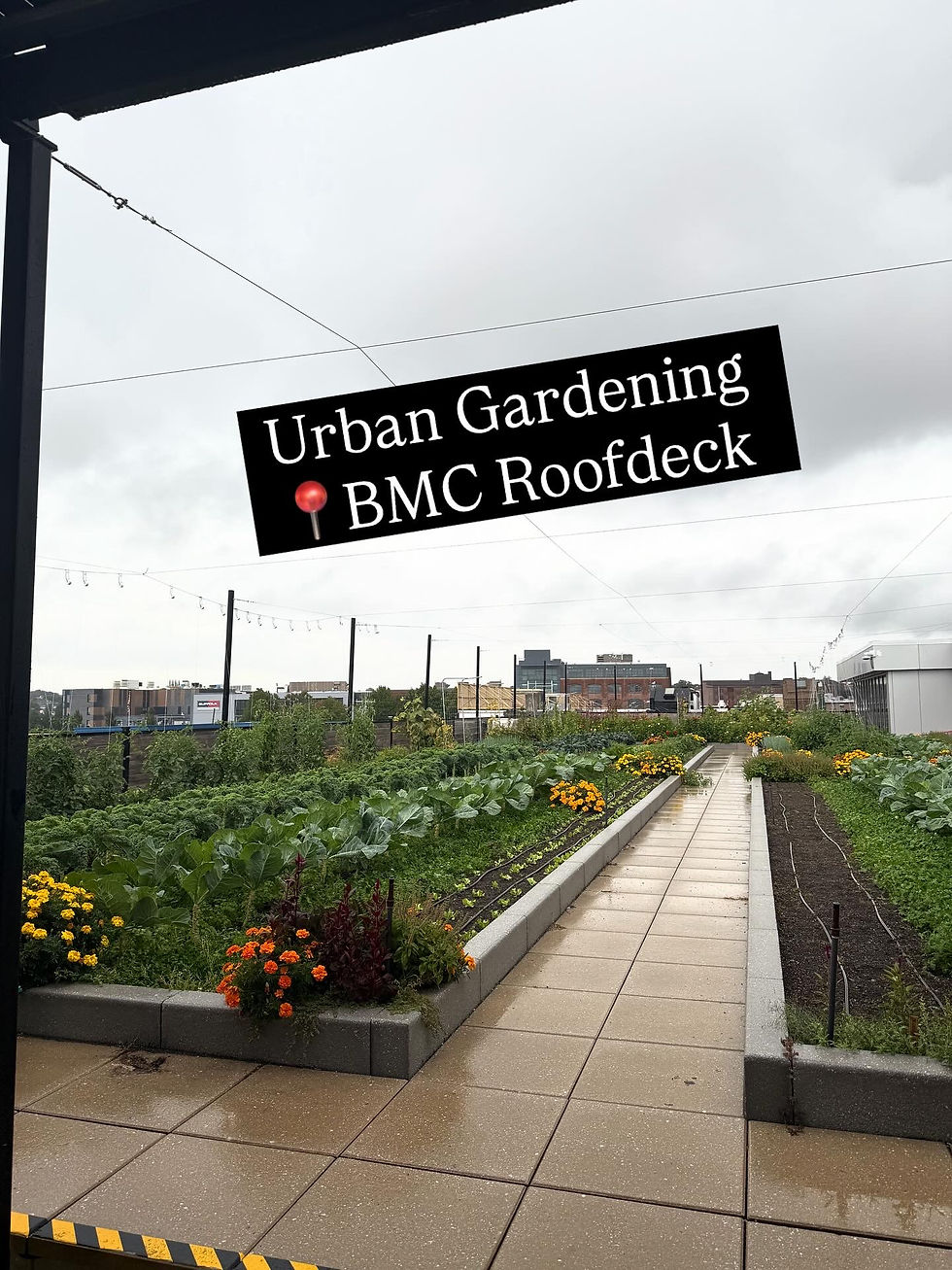
But technology has limits, and intellectual honesty requires naming them. New England will not grow its own citrus, coffee, rice, or tropical fruits in any economically meaningful quantity. The question of food sovereignty is never really about total self-sufficiency.
It’s about deciding which foods should be local priorities and building import supply chains for everything else that are fast, transparent, and traceable enough that consumers can trust what they’re buying.
This is where the sourcing standards explored in Part One of this series, Codex Alimentarius guidelines, GLOBALG.A.P. certification, GFSI-recognized programs, connect to the regional question. An oyster from a Wellfleet farm needs no certification label to carry its provenance. A mango from a supply chain touching four countries before it reaches a Boston grocery store is a different matter entirely.
Building the infrastructure to make the distinction legible to consumers, and to make local the default, not the premium, is the work.
🌱 A Personal Bet on the Solution: Who’s Your Farmer New England
The procurement laws described above establish what public institutions schools, agencies, hospitals, are permitted or encouraged to do. But the bigger lever may be consumer behavior, and consumer behavior follows incentives.
Right now, your credit card rewards you for spending at Amazon, big-box grocers, and generic dining categories. It does not reward you for buying directly from a farm, visiting a farmers’ market, or joining a CSA. The people who grow your food are, financially, left out of the rewards economy entirely.
Who’s Your Farmer New England is my attempt to change that. It’s a mission-driven credit card and rewards platform designed to reward consumers for spending that strengthens the local food economy, farm-direct purchases, farmers’ markets, CSA subscriptions, and farm-to-table restaurants.
Its nonprofit arm, the Farm Futures Foundation, reimburses partner farms for credit card processing fees aka the hidden transaction costs that quietly erode small farm margins every time a customer pays by card.
And its third pillar, the Roots Collective, connects cardholders with mission-aligned businesses offering farm dinners, tastings, sailing lessons, wellness retreats, and other experiences that celebrate sustainable living.
The laws exist. The farms exist. The consumer appetite exists. What’s been missing is the financial infrastructure to make choosing local as frictionless as any other swipe.
Learn more or become a Founding Member at whosyourfarmernewengland.com.
The Right Questions
The question “Can New England feed itself?” sounds simple, but it may not be the right one.
Total food self-sufficiency is neither achievable nor, arguably, desirable for a region that trades on its connections to the wider world.... the molasses in the baked beans, the spices in the chowder, the coffee that accompanies both.
The more useful questions are these: What foods should New England be growing locally, and what policy, infrastructure, and financial incentives are needed to make that happen at scale? What foods make more sense to import? and how do we build import supply chains that are fast, transparent, and trustworthy enough that consumers can make informed choices? Who bears the cost of the gap between the food system we have and the one we say we want?
New England’s food future depends less on total self-sufficiency than on building a resilient system that blends local agriculture, smart imports, new technology, and the kinds of financial tools and policy frameworks that make choosing local the path of least resistance rather than the premium option.
The cranberry bogs are still here.
The lobster boats still go out before dawn.
The farmers’ market tables are full on Saturday mornings.
The infrastructure to connect all of that to the other ninety percent of what we eat....
that’s what we’re building.
Next in the US series: the Mid-Atlantic where Italian, Jewish, and Caribbean immigration layered over centuries of farming, and where the Hudson Valley is rewriting what regional food infrastructure can look like.
— Jennifer, Picky Eater Boston
Endnotes
1. Stensson, Annika. “How Lobster Went from Poverty Food to Luxury Staple.” National Restaurant Association, 2018.
2. Pollan, Michael. The Botany of Desire. Random House, 2001. (On New England apple diversity and heritage varieties.)
3. Kurlansky, Mark. Cod: A Biography of the Fish That Changed the World. Walker & Company, 1997.
4. Bragdon, Kathleen J. Native People of Southern New England, 1500–1650. University of Oklahoma Press, 1996.
5. Gabaccia, Donna R. We Are What We Eat: Ethnic Food and the Making of Americans. Harvard University Press, 1998.
6. Food Solutions New England. “A New England Food Vision.” University of New Hampshire, 2014.
7. Food Solutions New England. “50 by 60 Vision.” https://foodsolutionsne.org
8. Massachusetts General Laws, Chapter 7, §23B. Preference for Massachusetts Agricultural Products. Massachusetts FRESH Grant Program: Massachusetts Farm to School / DESE. https://www.massfarmtoschool.org/mafresh-grant. S.311, An Act Establishing Farm to School Grants to Promote Healthy Eating and Strengthen the Agricultural Economy (194th General Court).
9. Vermont Statutes Annotated, 16 V.S.A. §1264a. Farm-to-School Programs. Vermont Agency of Education, Local Foods Incentive Grant Program. Vermont Farm to School and Early Childhood Network. https://vermontfarmtoschool.org. Vermont FEED: 89% local purchasing statistic. https://vtfeed.org. NOFA-VT: “When Federal Cuts Undermine Local Progress.” July 2025. https://www.nofavt.org
10. Vermont Statutes Annotated, 6 V.S.A. §4719. Farm-to-School Grants.
11. Maine Department of Agriculture, Conservation and Forestry. Farm and Sea to School Program. https://www.maine.gov/dacf
12. Rhode Island General Laws §37-2-8. Preference for Local Agricultural Products.
13. Rhode Island General Laws §21-4.1-8. In-State Dairy Preference.
14. Connecticut General Statutes §10-215d. Farm-to-School Programs.
15. New Hampshire Department of Education. Farm to School Program Overview. https://www.education.nh.gov
16. Sky Greens. “The World’s First Low-Carbon Vertical Farm.” https://www.skygreens.com


Comments